
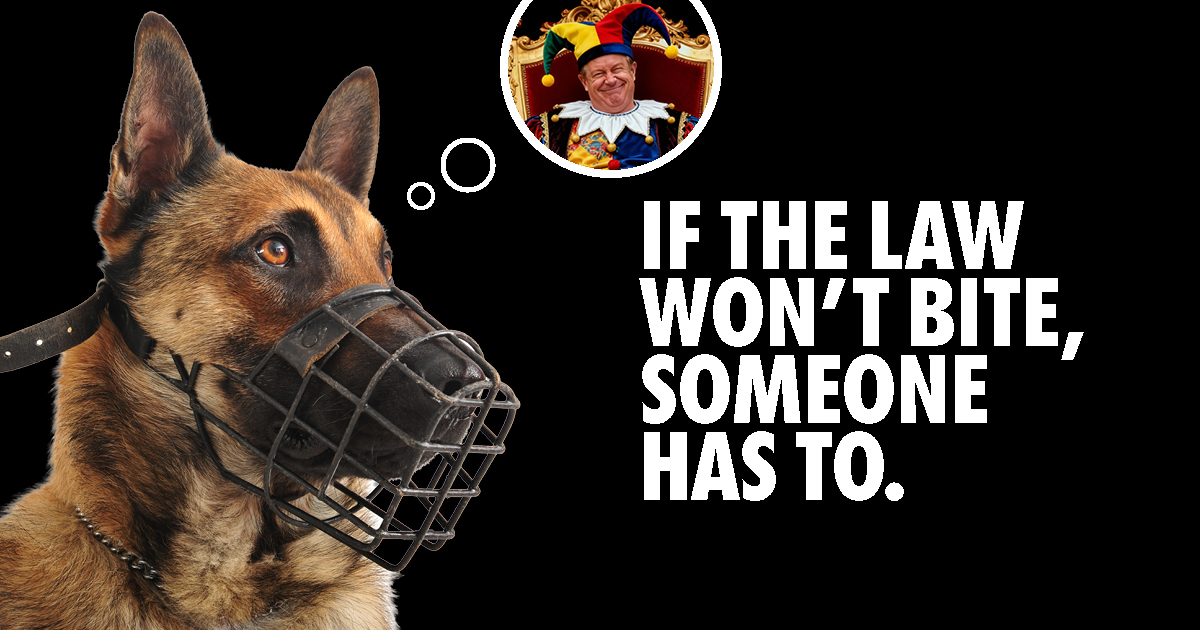
Yesterday the court handed down its final entry in State v. Mike Foley. It completed the quiet burial of a corruption case that began with a raid on the Clerk of Courts office, a Grand Jury indictment of twelve counts, and a felony plea that should have removed Foley from office under the Ohio Constitution. Then a plea reversal that was improper. The second plea deal was engineered to avoid required consequences. No prosecutor will appeal it. No judge will revisit it. And unless the Ohio Supreme Court steps in, no citizen will ever be permitted to challenge it.
This is not just a Montgomery County problem. It is an Ohio problem. It is a warning that our mechanisms for accountability have been quietly dismantled while no one was watching.
Last week I filed a notice of appeal and a Memorandum in Support of Jurisdiction in the Supreme Court of Ohio.\
Today, after the court issued its final entry in Foley’s criminal case yesterday, I filed a motion for leave to submit a supplemental memorandum because the constitutional issues became even more urgent.
The facts changed. The stakes did not. They only became clearer.
A Plea Deal No One Can Appeal
Ohioans grow up believing that justice means a jury of our peers. Foley will never face one. Yesterday’s plea deal ensured that no evidence would ever be reviewed in open court, no witnesses would testify, and no public record would ever be created. Seven counts supported by the State Auditor’s investigation and validated by a Grand Jury were dismissed without a single evidentiary hearing. The felony conviction that triggered removal from office was undone this summer. That reversal broke two hundred years of precedent on what qualifies as manifest injustice. Now, because no one besides the defendant has standing to challenge the plea, the decision stands unreviewed and becomes precedent moving forward.
The implications are catastrophic. If a court can undo a felony plea by simply declaring it unfair without the required showing, and if no higher court will review it, then the bar for manifest injustice collapses. Every plea in the state becomes vulnerable. Every removal provision in the Constitution becomes negotiable.
The Piergies Problem That No One Wants to Touch
At the center of this case was the arrangement that allowed Judge James Piergies to direct public money to the Clerk of Courts office, which then hired his unqualified son. That is not speculation. That is what the Grand Jury indicted on. The State Auditor’s July 31, 2024 press release described attempted unlawful interest in a public contract, aiding and abetting, unauthorized use of a computer, and theft in office.
Those charges are now gone. Not because the evidence was disproven. Not because the State found them lacking. They were erased through plea negotiations. The public was denied a trial. The record was erased before it could be created.
And the system did not blink.
Foley Again Uses Public Resources for Retaliation
This fall Foley used county systems to send out the infamous murder threat press release, identifying me and a former employee (a star witness in this corruption case) by name and accusing us of wanting to kill him. He opened the emergency CSPO hearing to television cameras even though it was supposed to be sealed. That is retaliatory misuse of public resources. It is exactly the conduct he was indicted for. There is no accountability for this either.
Yesterday, his new press release announcing the plea deal was remarkably professional, polished, and posted on county channels. It reads like a political message crafted to close the book while avoiding every hard fact. It is designed to reassure the public that nothing serious ever happened.
This Is Not Just About Foley
The Ohio Supreme Court now has filings before it that raise an unavoidable question. If local prosecutors decline to enforce removal provisions, and if citizens are barred from bringing quo warranto, then who is left to enforce the Constitution. The answer, after yesterday, is no one.
This is not theoretical. One week ago the Twelfth District Court of Appeals issued a decision in Koger Kidd v. Earley that dismissed a quo warranto action because the relator did not personally claim entitlement to the office. That ruling places every citizen in Ohio behind locked doors. When prosecutors refuse to act, and they often do, there is no one who can.
This is not a Montgomery County limitation. It is a statewide shutdown of a core constitutional check on public officeholders.
The Court Cannot Ignore What Happened Yesterday
The final entry in Foley’s case does three things that should concern everyone in Ohio.
- It eliminates felony convictions that required removal from office.
- It insulates Foley from further prosecution.
- It leaves misconduct by the court and the prosecutors unexamined and unreviewable.
Because there is no one who will appeal the plea deal, it becomes the final word unless the Supreme Court accepts jurisdiction in my case. If they do not, the window closes and this becomes the model for how public corruption cases can be neutralized in the future.
Why My Filing Matters for the Entire State
My appeal is not about taking a job from Foley. It is about whether the vacancy provision in the Ohio Constitution (Article II, Section 38 | Removal of officials for misconduct) means what it says or whether it can be erased by local negotiations. It is about whether manifest injustice still has a high standard or if a judge can undo a felony plea in a fifteen minute hearing with no supporting evidence. It is about whether quo warranto remains a tool for the people or becomes an extinct form of relief.
If the Supreme Court denies review, then every public official in Ohio can avoid removal by negotiating plea deals that sidestep the Constitution. Prosecutors can dismiss Grand Jury counts without explanation. Courts can undo pleas whenever they wish. And citizens will have no avenue to challenge any of it.
We will have a government run by politicians for themselves, not a government by the people.
Ohio deserves better than this. The law deserves better than this. We deserve better than a system that shields misconduct rather than exposing it.
Yesterday was not the end of the Foley case. It was the moment that proved why this appeal matters to every taxpayer and every voter in this state.
SONG: You can’t touch them, by David Esrati
UPDATE
10 Dec 2025. The Ohio Supreme Court rejected the addendum- and I have to refile as a single document.
Working on it.
UPDATE
11 Dec 2025, I filed a combined document of the two memos, plus a separate exhibits file.
Some interesting developments in the Quo Warranto and Manifest Injustice space that should have bearing.
Au contraire, that guilty plea was no “concession”, Mike Foley.
We all know you’re a guilty criminal – you and this guy. Wake up!
https://bsky.app/profile/jennburrill.bsky.social/post/3m7g6o6wc7c2r
You both can’t hide your lying from the public eye forever.
Stinks!
Had to refile- with new memo- all in one.
Here it is.